


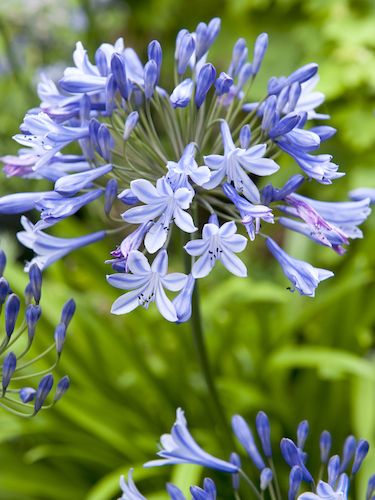
Agapanthus 'Dr Brouwer'
Estimated shipping dates: Spring 2027
- Dispatched in the planting window, February to May.
- Top-size, quality bulbs, carefully sourced and dispatched from our family-run nursery in Cheshire.
- Growing guarantee. If it fails to perform in its first season, tell us and we will put it right.
- Height
- 80cm / 32"
- Aspect
- Full Sun / Partial Shade
- Hardiness
- Hardy - H4 (-5°C to -10°C)
- Scented
- No
- Pollinator
- Yes
- Border position
- Middle/Back
Planting and flowering
- Jan
- Feb
- Mar
- Apr
- May
- Jun
- Jul
- Aug
- Sep
- Oct
- Nov
- Dec
- Height
- 80cm / 32"
- Aspect
- Full Sun / Partial Shade
- Hardiness
- Hardy - H4 (-5°C to -10°C)
- Scented
- No
- Pollinator
- Yes
- Border position
- Middle/Back
Planting and flowering
- Jan
- Feb
- Mar
- Apr
- May
- Jun
- Jul
- Aug
- Sep
- Oct
- Nov
- Dec
About Agapanthus 'Dr Brouwer'
Limited Availability – XL Roots of Agapanthus 'Dr Brouwer'
Agapanthus 'Dr Brouwer' is a truly striking variety of African Lily, known for its deep, dark stems that beautifully contrast with its soft lilac flowers. Blooming in late summer, this elegant perennial adds height, structure, and a touch of drama to any garden setting.
Native to South Africa, Agapanthus thrive in sunny spots and are equally at home in garden borders or pots on a sunny patio. 'Dr Brouwer' is particularly eye-catching when planted in groups, where the tall stems and clusters of delicate blooms can sway gracefully in the breeze.
These are XL roots – not your average starter plants – meaning you’ll enjoy stronger, more established growth and an even better floral display. With limited stock available, now’s the perfect time to grab yours and get planting.
Whether you're refreshing a border, filling out a patio pot, or starting a new sun-loving garden bed, Agapanthus 'Dr Brouwer' will bring elegance and reliable late-season colour year after year. Don't miss out on this special offer!
- It may take two or three years for agapanthus plants to establish before flowering really takes off, but after this they will grow in to long-flowering clumps.
- If your agapanthus clumps become too big, they can be lifted and split every four to five years.
- You may need to protect your agapanthus against slugs and snails.
Full specification
- Also known as
- African Lily
- Genus
- Agapanthus
- Colours
- Lavender/Lilac
- Planting period
- Spring
- Height Range
- Medium/Tall
- Height
- 80cm / 32"
- Border position
- Middle/Back
- Aspect
- Full Sun / Partial Shade
- Soil Type
- Loam, Sandy, Multipurpose Compost, Loam-based compost
- Bulb Size
- XL Roots
- Hardiness
- Hardy - H4 (-5°C to -10°C)
- Suitable for containers
- Yes
- Scented
- No
- Pollinator
- Yes
- Toxicity
- No report
- Estimated shipping dates
- Spring 2027
- Delivery period
- Spring (Feb to May 2027)
Planting
How to plant Agapanthus
- Plant your agapanthus roots in the spring.
- Start off in a frost free area before transplanting after the risk of frosts have passed. Or plant straight outside after the last frosts have finished.
Planting Agapanthus in the Garden
- Planting in the garden, ensure you have well drained soil and add grit to help with drainage.
- Position your agapanthus in full sun/partial shade.
- Plant your agapanthus 5-10cm (2-4") deep.
- Space the agapanthus 15-20cm (6-8") apart.
- Keep hydrated during active growth.
Planting Agapanthus in Pots/Containers
- Planting in pots, use a good-quality, multipurpose compost or use a loam-based compost, such as John Innes No. 2 or No. 3.
- Grow single plants in a 20-23cm (8-9in) in diameter container.
- For a fuller display, plant 4 agapanthus roots in a 50cm (20") pot.
- Plant your agapanthus 5-10cm (2-4") deep.
- Keep hydrated during active growth.
Care
How to care for Agapanthus
- Once your Agapanthus has finished flowering, cut off the flowers and leave the foliage to die back naturally.
- You can clip off any unsightly leaves once they've browned. It won't harm the Agapanthus if you trim the ends of the leaves also.
- By the Autumn, you can remove all spent foliage.
- Feed with a high potassium fertiliser.
- You can cover your Agapanthus with some dry mulch over winter. If you are prone to a wet and cold climate, we recommend growing these in pots so that you can move your pots under shelter and protect them from frosts during the winter.
- You may need to protect your agapanthus against slugs and snails.
Be the first to share your thoughts on this variety.
Frequently asked
Should I remove the deadheads from agapanthus plants please? and/or leaves which have all flopped and look untidy? Thank you
Hi there, Once your Agapanthus has finished flowering for Spring, you can cut off the stem leaving the foliage to die back naturally. This will feed the bulbs for them to flower again the following the year. If the tips of the leaves turn brown, you can tidy these up by cutting the ends off - preferably in a 'V' shape so they still look natural. By the Autumn, everything should have turned brown, you can then remove all the foliage that has died and cover your Agapanthus with some mulch for protection against frosts.
The Hart Familygeneral test
Send it over and one of our growers will reply — usually the same day.