


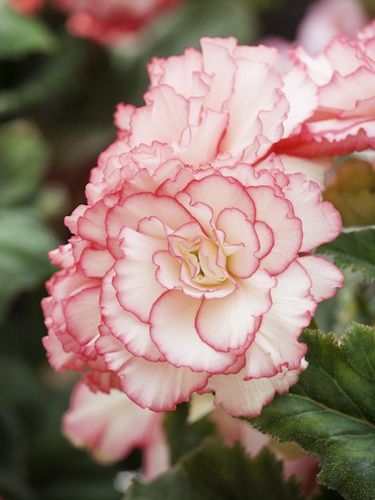
Picotee Begonia
Begonia Picotee Red/White (Pack of 5)
£6.50£6.50
In stock
Estimated shipping dates: Spring 2027
- Dispatched in the planting window, February to May.
- Top-size, quality bulbs, carefully sourced and dispatched from our family-run nursery in Cheshire.
- Growing guarantee. If it fails to perform in its first season, tell us and we will put it right.
- Height
- 30-40cm / 12-16"
- Aspect
- Full Sun / Partial Shade
- Hardiness
- Tender - H2 (1° to 5°)
- Scented
- No
- Pollinator
- No
- Border position
- Front
Planting and flowering
- Jan
- Feb
- Mar
- Apr
- May
- Jun
- Jul
- Aug
- Sep
- Oct
- Nov
- Dec
Plant In flower
- Height
- 30-40cm / 12-16"
- Aspect
- Full Sun / Partial Shade
- Hardiness
- Tender - H2 (1° to 5°)
- Scented
- No
- Pollinator
- No
- Border position
- Front
Planting and flowering
- Jan
- Feb
- Mar
- Apr
- May
- Jun
- Jul
- Aug
- Sep
- Oct
- Nov
- Dec
Plant In flower
About Begonia Picotee Red/White (Pack of 5)
Begonia Picotee Red/White is a statement in its own! However, imagine mixing it alongside a plain white or red begonia, or both! Plant all 3 together for a real candy stripe collection of Begonias. What a generous potted display of colourful blooms.
Choose Begonia Picotee Red/White, a long-lasting begonia for your borders or pots/containers to brighten up your summer. Use these delightfully coloured flowers to decorate your most attractive containers to have as a enjoyable feature on your patio.
Full specification
- Genus
- Picotee Begonia
- Colours
- Red/White
- Planting period
- Spring
- Height Range
- Medium
- Height
- 30-40cm / 12-16"
- Border position
- Front
- Aspect
- Full Sun / Partial Shade
- Soil Type
- Loam, Sandy, Multipurpose Compost
- Bulb Size
- 8cm - Top Size!
- Hardiness
- Tender - H2 (1° to 5°)
- Suitable for containers
- Yes
- Scented
- No
- Double Flowered
- Yes
- Pruning
- Yes - deadhead to promote growth
- Pollinator
- No
- Toxicity
- No report
- Estimated shipping dates
- Spring 2027
- Delivery period
- Spring (Feb to May 2027)
Planting
How to plant Begonias
- Begonia Tubers are ideal for containers, pots or tubs. They can also be transplanted to the garden beds.
- Plant in the spring for summer flowering.
Planting In Pots
- Plant your tubers in the Spring. Starting them off indoors in the early spring months whilst there is still a risk of frost.
- Use a multi-purpose compost in full sun / partial shade.
- Ensure you have drainage holes in your pots and add grit to encourage free draining.
- We advise planting 3 x tubers into an average-sized container.
- Position the Begonia tubers just below the compost surface with the 'hole' of the tuber facing up, cover with 2-3cm (1") of compost.
- Space your tubers about 8-10cm (3-4") apart depending on your pot size.
Planting In the Garden
- After the last frosts (usually March/April), you can plant your Begonia tubers outside in a well-drained soil in a sunny position.
- Unlike other garden bulbs with a pointy tip, Begonia tubers have a hollow hole in the centre of them, plant them with this hole pointing upwards.
- Plant your Begonias shallowly, covering them with just 2-3cm (1") of soil. Space your tubers about 25cm (10") apart.
Care
How to care for Begonias
- Feed and water Begonia plants frequently throughout the growing season. Take care not to over water.
- Feed your Begonias with a high-potash fertiliser like a tomato feed.
- Deadhead faded flower heads regularly, this will encourage new growth for longer.
- Once the Begonia flowering season has finished, the stems and foliage will turn yellow and die back naturally.
- Reduce watering to prevent rotting.
- Once all the stems have fallen off naturally, dig out the tubers, clean and dry them before storing them away in peat or sand in a dry, frost-free area like a garage or shed.
- Replant the following Spring.
Be the first to share your thoughts on this variety.
Frequently asked
general test
General Test Answer
Ask a Question
Send it over and one of our growers will reply — usually the same day.