


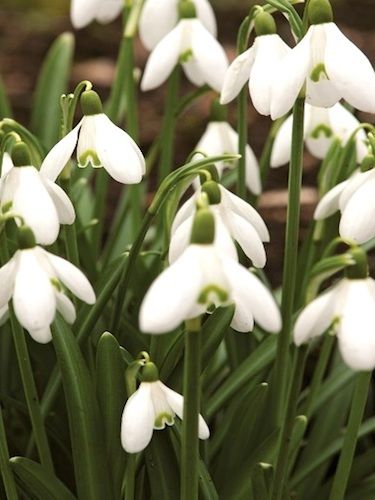
Galanthus Nivalis (Pack of 20) (Common Snowdrop)
30% off Autumn Planted Bulbs
Estimated shipping dates: Dispatched in 3-5 working days
- Dispatched in the planting window, September to November.
- Top-size, quality bulbs, carefully sourced and dispatched from our family-run nursery in Cheshire.
- Growing guarantee. If it fails to perform in its first season, tell us and we will put it right.
- Height
- 12cm / 5"
- Aspect
- Partial Shade
- Hardiness
- Hardy - H5 (-15°C to -10°C)
- Scented
- Yes
- Pollinator
- Yes
- Border position
- Front
Planting and flowering
- Jan
- Feb
- Mar
- Apr
- May
- Jun
- Jul
- Aug
- Sep
- Oct
- Nov
- Dec
- Height
- 12cm / 5"
- Aspect
- Partial Shade
- Hardiness
- Hardy - H5 (-15°C to -10°C)
- Scented
- Yes
- Pollinator
- Yes
- Border position
- Front
Planting and flowering
- Jan
- Feb
- Mar
- Apr
- May
- Jun
- Jul
- Aug
- Sep
- Oct
- Nov
- Dec
About Galanthus Nivalis (Pack of 20) (Common Snowdrop)
Galanthus Nivalis, commonly known as the Common Snowdrop, is one of the most beloved and recognisable early spring flowers. As one of the first blooms to appear in the late winter and early spring months, it heralds the changing seasons, often emerging through frost and even snow. This classic wild species is ideal for naturalising, spreading gradually over time to form dense, beautiful drifts.
Thriving in woodland settings, Galanthus nivalis pairs beautifully with other shade-loving plants such as Cyclamen, Hellebores, and Ferns. It flourishes best in moist, well-drained soil and is particularly effective when planted in clumps or scattered around the base of deciduous trees, where it can receive dappled sunlight before the trees fully leaf out in spring.
With its elegant, nodding white flowers and delicate green markings, the Common Snowdrop is not only a visual delight but also a valuable nectar source for early-emerging pollinators. Low-maintenance and exceptionally hardy, it requires minimal care once established and will reliably return year after year, making it a wonderful choice for gardeners looking to create a naturalised, woodland-inspired display.
Full specification
- Also known as
- Snow Drops, Galanthus
- Genus
- Snowdrop
- Colours
- White
- Planting period
- Autumn (Sept to Nov)
- Height Range
- Tall
- Height
- 12cm / 5"
- Border position
- Front
- Aspect
- Partial Shade
- Soil Type
- Loam, Sandy, Clay, Multipurpose Compost
- Hardiness
- Hardy - H5 (-15°C to -10°C)
- Suitable for containers
- Yes
- Scented
- Yes
- RHS Award of Garden Merit (AGM)
- Yes
- Pollinator
- Yes
- Toxicity
- Harmful if eaten, Skin/eyes irritant
- Estimated shipping dates
- Dispatched in 3-5 working days
- Delivery period
- Autumn delivery (Oct to Dec 2026)
Planting
How to plant Snowdrops
- Find a location with well-drained, moist soil
- Snowdrops grow well in full Sun or partially-shaded areas.
- If planting in the garden, plant the bulbs 6-8cm below the soil surface.
- If planting in Pots, find a container and fill it with good-quality, well-drained soil. Ensure there is adequate draining holes.
- Plant in the Autumn, September through November.
- After planting, water well, gently soaking the soil to settle it around the bulbs.
- Snowdrops will flower February through to March.
Care
How to care for Snowdrops
- After flowering has finished for the season leave the foliage in place; don't cut it off. The leaves will gather sunlight, create food through photosynthesis and strengthen the bulbs for the future.
- Water as needed during active growth periods.
- Allow the flower to die back completely before clearing away any foliage.
Be the first to share your thoughts on this variety.
Frequently asked
general test
Send it over and one of our growers will reply — usually the same day.