


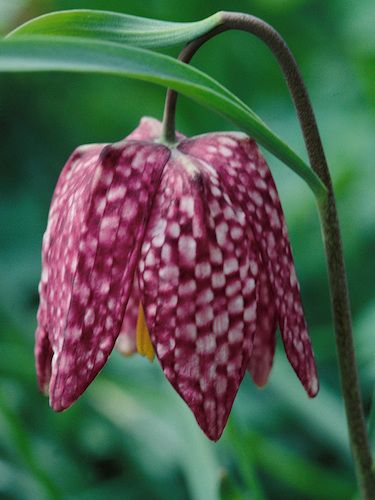
Fritillaria Meleagris
30% off Autumn Planted Bulbs
Estimated shipping dates: Dispatched in 3-5 working days
- Dispatched in the planting window, September to November.
- Top-size, quality bulbs, carefully sourced and dispatched from our family-run nursery in Cheshire.
- Growing guarantee. If it fails to perform in its first season, tell us and we will put it right.
- Height
- 15-20cm / 6-8"
- Aspect
- Full Sun / Partial Shade
- Hardiness
- Hardy - H5 (-15°C to -10°C)
- Scented
- No
- Pollinator
- Yes
- Border position
- Front
Planting and flowering
- Jan
- Feb
- Mar
- Apr
- May
- Jun
- Jul
- Aug
- Sep
- Oct
- Nov
- Dec
- Height
- 15-20cm / 6-8"
- Aspect
- Full Sun / Partial Shade
- Hardiness
- Hardy - H5 (-15°C to -10°C)
- Scented
- No
- Pollinator
- Yes
- Border position
- Front
Planting and flowering
- Jan
- Feb
- Mar
- Apr
- May
- Jun
- Jul
- Aug
- Sep
- Oct
- Nov
- Dec
About Fritillaria Meleagris
Delight in the charming beauty of Fritillaria meleagris, famous for its distinctive chequered pattern in shades of purple and white. This graceful spring bloomer reaches a modest height of 15–20cm, making it perfect for naturalising in borders, rock gardens, or wildflower meadows.
Flowering from March to May, its nodding, bell-shaped flowers rise above slender, grassy foliage. The plant grows from a small, button-shaped bulb approximately 2cm in diameter and prefers well-drained, sandy soil to thrive.
Add a touch of delicate elegance and unique patterning to your spring garden with the delightful Fritillaria meleagris.
For more information on how to plant and care for your Fritillaria
Full specification
- Also known as
- Snakeshead Lily
- Genus
- Fritillaria
- Colours
- Purple with speckles
- Planting period
- Autumn (September/October)
- Height Range
- Short
- Height
- 15-20cm / 6-8"
- Border position
- Front
- Aspect
- Full Sun / Partial Shade
- Soil Type
- Loam, Sandy, Multipurpose Compost, Loam-based compost
- Hardiness
- Hardy - H5 (-15°C to -10°C)
- Suitable for containers
- Yes
- Scented
- No
- Double Flowered
- No
- RHS Award of Garden Merit (AGM)
- Yes
- Pollinator
- Yes
- Toxicity
- No report
- Estimated shipping dates
- Dispatched in 3-5 working days
- Delivery period
- Autumn delivery (Oct to Dec 2026)
Planting
How to plant Fritillaria Meleagris
- Fritillaria Meleagris should be planted in the Autumn for Spring flowering.
- Find a location with full sun or partial shade with well-drained, sandy soil, if necessary add sand, grit or gravel to be improve the condition of the area for planting.
- Arrange the bulbs in clusters.
- If planting in the garden, plant the bulbs about 1-2" apart.
- Ideal for rockeries.
- If planting in pots, use good-quality, multi-purpose compost, preferably adding sand to the planting hole to prevent the bulbs from rotting.
- Plant the bulbs 2-3" of soil above them.
- It is best to plant the Meleagris bulb on its side - this prevents water collecting at the top of the bulb and causing it to rot.
Care
How to care for Fritillaria Meleagris
- If planting in borders in the garden, the soil must be well drained and, preferably, sandy.
- If planting in pots, make sure the Fritillaria Assyriaca/Uva Vulpis are kept moist but do not get waterlogged.
- If planting in pots, it may be an idea to tilt the pots on their side during winter to prevent waterlog.
- When the Fritillaria Meleagris has finished flowering, cut any seed heads back and allow the foliage to die back naturally. Once all the foliage and stem has turned brown and hollow, you can remove them and discard.
- Fritillaria Meleagris bulbs will multiply during the first or second year of planting.
- Ideally, the best time to lift and check your bulbs for dividing is during the months of August and September. Once, you have divided your bulbs, they will all need replanting.
- Prevent the Scarlet Lily beetle from ruining your Fritillarias by using our Lily Beetle Prevention spray.
Be the first to share your thoughts on this variety.
Frequently asked
Have just bought 160 of these, giving them to friends. Please email planting instructions
This question was asked by
Thank you for your order. Please find below, planting instructions for Fritillaria Meleagris:
PLANTING
Fritillaria Meleagris should be planted in the Autumn for Spring flowering.
Find a location with full sun or partial shade with well-drained, sandy soil, if necessary add sand, grit or gravel to be improve the condition of the area for planting.
Arrange the bulbs in clusters.
If planting in the garden, plant the bulbs about 1-2" apart.
Ideal for rockeries.
If planting in pots, use a good-quality, multi-purpose compost, preferably adding sand to the planting hole to prevent the bulbs from rotting.
Plant the bulbs 2-3" of soil above them.
It is best to plant the Meleagris bulb on its side - this prevents water collecting at the top of the bulb and causing it to rot.
CARE
If planting in borders in the garden, the soil must be well drained and, preferably, sandy.
If planting in pots, make sure the Fritillaria Assyriaca/Uva Vulpis are kept moist but do not get waterlogged.
If planting in pots, it may be an idea to tilt the pots on their side during winter to prevent waterlog.
When the Fritillaria Meleagris has finished flowering, cut any seed heads back and allow the foliage to die back naturally. Once all the foliage and stem has turned brown and hollow, you can remove them and discard.
Fritillaria Meleagris bulbs will multiply during the first or second year of planting.
Ideally, the best time to lift and check your bulbs for dividing is during the months of August and September. Once, you have divided your bulbs, they will all need replanting.
Prevent the Scarlet Lily beetle from ruining your Fritillarias by using our Lily Beetle Prevention spray.
Fritillaria Meleagris (Pack of 20 Bulbs) (harts1122)
Lily Beetle Prevention (SKU17972)
The Hart Family
general test
Send it over and one of our growers will reply — usually the same day.