


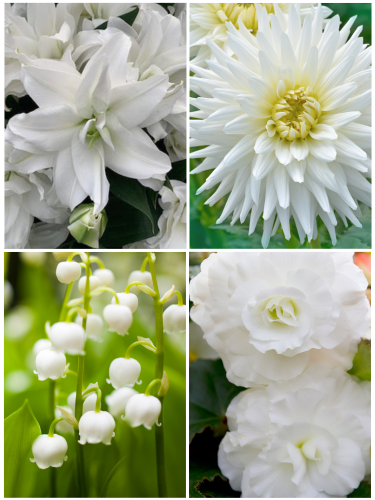
Mother's Day Gift Box 'Simply Bliss'
Estimated shipping dates: Dispatched by 10th March
- Dispatched in the planting window, February to May.
- Top-size, quality bulbs, carefully sourced and dispatched from our family-run nursery in Cheshire.
- Growing guarantee. If it fails to perform in its first season, tell us and we will put it right.
- Height
- 15-100cm / 6-39"
- Aspect
- Full Sun / Partial Shade
- Hardiness
- Check each variety separately
- Scented
- Yes
- Pollinator
- Yes
- Border position
- Front/Middle/Back
Planting and flowering
- Jan
- Feb
- Mar
- Apr
- May
- Jun
- Jul
- Aug
- Sep
- Oct
- Nov
- Dec
- Height
- 15-100cm / 6-39"
- Aspect
- Full Sun / Partial Shade
- Hardiness
- Check each variety separately
- Scented
- Yes
- Pollinator
- Yes
- Border position
- Front/Middle/Back
Planting and flowering
- Jan
- Feb
- Mar
- Apr
- May
- Jun
- Jul
- Aug
- Sep
- Oct
- Nov
- Dec
About Mother's Day Gift Box 'Simply Bliss'
Mother’s Day – Sunday 15th March 2026
Celebrate Mum with a gift she can enjoy all year round. Our gardening-inspired Mother’s Day Gift Boxes are perfect for green-fingered mums — a thoughtful alternative to a bouquet, filled with favourites that will bloom long after the day itself.
Order by Monday 9th March to guarantee delivery in time for Mother’s Day.
Mother’s Day Gift Box – ‘Simply Bliss'
Gift Box includes:
- 3 × White Roselilies
- 5 × Lily of the Valley
- 5 × Double Begonia White
- 3 × White Dahlia
- 1 × Handwritten Gift Card*
Send to yourself or directly to your mum — simply add her address at checkout and leave your personal message in the comments section for us to handwrite on the card.
Products may vary slightly due to crop levels.
Full specification
- Also known as
- Dahlia, Begonia, Lilium, Convillaria
- Genus
- Dahlia, Begonia, Lily & Lily of the Valley
- Colours
- White
- Planting period
- Spring
- Height Range
- Short/Medium/Tall
- Height
- 15-100cm / 6-39"
- Border position
- Front/Middle/Back
- Aspect
- Full Sun / Partial Shade
- Soil Type
- Check each variety separately
- Hardiness
- Check each variety separately
- Suitable for containers
- Yes
- Scented
- Yes
- Double Flowered
- Yes - some
- Pollinator
- Yes
- Estimated shipping dates
- Dispatched by 10th March
- Delivery period
- Spring (March 2027)
Planting
How to plant Dahlias
Planting Dahlias in the Garden
- If panting in the garden, plant in late spring once the risk of frost has passed.
- Find a good location with plenty of sun and drainage.
- Cover your tubers with 3cm (1-2") of soil.
- Allow approx. 30cm spacing between each tuber. (The spacing may vary depending on the final size of the variety.)
- Douse the hole with a watering can full of water and cane as you plant.
- Mulch over to protect them from the risk of any frost.
- Planting in Pots/Containers
- If planting in pots, start them off indoors until the risk of frost has passed.
- Keep them indoors in a frost-free location like a greenhouse before transferring them outside after the last frosts.
- Plant 1 x tuber in a 2-3litre pot or 12" in diameter.
- Cover your tubers with 3cm (1-2") of soil.
- Use a good-quality, multipurpose compost.
Aftercare/Overwintering
- Once your dahlias have finished flowering and the first frosts have blackened the foliage, cut the plants back to the ground.
- In well-drained soils, leave the tubers in the ground and mulch over to protect against frosts.
- In colder climates or heavier soils, lift and store your tubers over winter.
- If lifting and storing over winter, cut back foliage and carefully lift the tubers out of the soil. Allow the tubers to dry off naturally and then clean away any soil. Trim the stems back and cut off any fine roots. Make sure the tubers are completely dry before storing them into open trays or boxes. Pack with dry sand. Leave the crowns exposed.
- Replant the following spring.
- Must be kept frost free.
- Once the risk of frosts have passed and you start to see signs of growth again, the mulch can be removed.
- Water regularly during active growth periods.
- See 'Care Instructions' for more information.
How to plant Roselilies
- Roselily Bulbs should be planted as soon as possible. Ideally in the Spring but can be planted up until the Autumn.
- Find a location with full sun or partial shade with well-drained soil.
- Roselilies tend to grow exceptionally well in pots and tubs.
- Plant the bulbs with 4-6" of soil above them.
Planting Roselilies in the Garden
- Find a location with full sun or partial shade with well-drained soil.
- Roselilies prefer an Acidic/Ericaceous Soil type. They do not tolerate Lime very well.
- Arrange the Lilies in an odd-number grouping.
- Plant the bulbs about 12-20cm (5-8") apart.
- Space the groupings at least 60-90cm (2-3ft) apart.
- Plant the bulbs with 10-15cm (4-6") of soil above them.
Planting Roselilies in Pots
- Find a location with full sun or partial shade with well-drained soil.
- Plant 3 bulbs in a 10-14" 'patio type' pot using good-quality, multi-purpose compost.
- John Innes No. 3 is ideal for lilies.
- Plant the bulbs with 10-15" (4-6") of soil above them.
- Ensure there is adequate drainage.
How to plant Begonias
- Begonia Tubers are ideal for containers, pots or tubs. They can also be transplanted to the garden beds.
- Plant in the spring for summer flowering.
Planting Begonias in Pots
- Plant your tubers in the Spring. Starting them off indoors in the early spring months whilst there is still a risk of frost.
- Use a multi-purpose compst in full sun / partial shade.
- Ensure you have drainage holes in your pots and add grit to encourage free draining.
- We advise planting 3 x tubers into an average-sized container.
- Position the Begonia tubers just below the compost surface with the 'hole' of the tuber facing up, cover with 2-3cm (1") of compost.
- Space your tubers about 8-10cm (3-4") apart depending on your pot size.
Planting Begonias in the Garden
- After the last frosts (usually March/April), you can plant your Begonia tubers outside in a well-drained soil in a sunny position.
- Unlike other garden bulbs with a pointy tip, Begonia tubers have a hollow hole in the centre of them, plant them with this hole pointing upwards.
- Plant your Begonias shallowly, covering them with just 2-3cm (1") of soil. Space your tubers about 25cm (10") apart.
How to plant Lily of the Valley
- Plant your Convallaria in the spring once the frosts have passed (or start off indoors).
- Soak roots in water for 30minutes if they are a little dry.
- If planting in the garden, find a shady area, preferably with moist soil.
- Plant about 5-10cm (2-4") deep leaving the shoot just above the surface.
- If planting in pots, fill the pot with compost and plant about 5-10cm deep leaving the shoot just above the surface.
- Plant pointy end up and 5-10cm (2-4") apart.
- Water in after planting and keep hydrated.
Care
How to care for Dahlias
Care:
- Support Dahlias with canes on planting and tie in as growth develops.
- When your Dahlias reach about 40cm in height, pinch out the growing tips with your thumb and forefinger or use a sharp knife. This will encourage branching.
- Water once a week with a good amount not just a little sprinkle.
- Deadhead flowers as they fade.
Overwintering:
- Once the first frosts have blackened the foliage, cut the plants back to the ground.
- If panted in the garden, in well-drained soils, leave the tubers in the ground and cover with a generous layer of bark chips or compost to protect them from frost.
- In colder climates or heavier soils, lift and store your tubers over winter.
- If planted in pots, cut back the entire plant to 4 – 6 inches. Keep the dahlias in their pot over winter. Keep the pot in a cool, dry, dark place that doesn't freeze like, garage, shed or greenhouse.
- Don't water your tubers, just let them stay dry.
Lifting and Storing over winter:
- Cut back foliage and carefully lift the tubers out of the soil.
- Allow the tubers to dry off naturally and then clean away any soil.
- Trim the stems back to 15-20cm and cut off any fine roots.
- Make sure the tubers are completely dry before storing them into open trays or boxes. Pack with peat-free compost or dry sand. Leave the crowns exposed.
- Replant the following spring.
How to care for Roselilies
- Roselilies can tolerate very cold conditions but they do not like to get wet.
- If planting in borders in the garden, the soil must be well drained and, preferably, humus rich.
- If planting in pots, make sure lilies are kept moist but do not get waterlogged.
- Lilies prefer to be planted in a location with at least half a day’s full sunshine, if it’s a bit too shady they will lean their stems towards the sun.
- Lily bulbs do not like to be dried out so they must be kept in soil at all times.
- Try to plant your lilies where they will dry out after rain to prevent Botrytis, a fungus that spots the leaves. If you do see brown spots on your leaves, spray with a fungicide recommended for roses.
- If planting in pots, it may be an idea to tilt the pots on their side in the winter to prevent waterlog.
- When the Lily has finished flowering, cut any seed heads back and allow the foliage to die back naturally. Do not be tempted to cut the stem back until stems becomes hollow and brown.
- Lilies like a cold dormant phase throughout the winter so they don't need lifting. However, do ensure they have adequate drainage and do not get waterlogged as this will cause the bulbs to rot.
- After a few years of flowering, you may find your Roselily produces less blooms, it may be time to lift your bulbs and divide them by breaking off the bulblets. All the bulbs will then need replanting.
- To prevent Lily Beetles from damaging your lilies, we recommend using the Lily Beetle Prevention Spray or you can make up your own with the Concentrate. This Spray (Grazers G4) will also stimulate growth of your lilies.
- You can feed your lilies with a Tomato Feed to stimulate and strengthen your lilies when you start to see signs of growth. Make up your tomato feed with half the recommended dilution (written on the instructions on the bottle) and feed once every 3 weeks.
How to care for Begonias
- Feed and water Begonia plants frequently throughout the growing season. Take care not to over water.
- Feed your Begonias with a high-potash fertiliser like a tomato feed.
- Deadhead faded flower heads regularly, this will encourage new growth for longer.
- Once the Begonia flowering season has finished, the stems and foliage will turn yellow and die back naturally.
- Reduce watering to prevent rotting.
- Once all the stems have fallen off naturally, dig out the tubers, clean and dry them before storing them away in peat or sand in a dry, frost-free area like a garage or shed.
- Replant the following February.
How to care for Lily of the Valley
- Water in after planting and keep hydrated.
- Top dress with leaf mould in autumn.
Be the first to share your thoughts on this variety.
Frequently asked
general test
Send it over and one of our growers will reply — usually the same day.